



The Effects Of Alcohol On Sport Performance

Contact Tranquil Shores

This site is protected by reCAPTCHA and the Google Privacy Policy and Terms of Service apply.

Find Your Insurance
Making Your Recovery Affordable

Alcohol and athletes seem to be culturally tied together. Around the world, alcoholic beverage companies sponsor sports teams and advertise their products throughout the game. Baseball players celebrate a win by spraying champagne all over the locker room. Super Bowl parties commonly feature a well-stocked beer supply. Alcohol is often associated with manliness, prestige and conquering the opposition.

In one study, over 30% of college athletes said they binge drink at least once a month or more. Male or female athletes might drink alcohol for a range of reasons, including:

  • To celebrate a win
  • To cope with the pressure
  • In response to social pressure to drink
  • To relax after a game
  • To relieve anxiety pre-game
  • To deal with feelings of failure

Drinking alcohol also affects young athletes. For example, a study published in 2019 found that almost 60% of students drink alcohol by graduation. In both colleges and high schools, student-athlete alcohol abuse is far too common.

How Does Alcohol Affect Athletic Performance?

When an athlete is under the influence of alcohol, they may feel invincible and in control of any pre-game jitters. However, there is no real reward for alcohol abuse. As you will see, drinking has a negative effect on performance during and after a game.

Drinking Before Exercise

Alcohol and sports performance have a complicated but largely negative relationship. Drinking before a game may temporarily relieve anxiety, for example, but that is only because drinking alcohol depresses the central nervous system (CNS). Depressing the CNS can lead to:

  • Decreased coordination.
  • Impaired balance.
  • Weakened motor skills.
  • Impaired judgment.
  • Delayed reactions.


Alcohol also decreases endurance. It is mostly absorbed by the body as ethanol and has several effects on metabolic function. For example, it inhibits gluconeogenesis, which is the process of producing sugars needed for energy. Alcohol also speeds up the heart rate during exercise because of cardiovascular strain. These factors contribute to reduced endurance. 

Alcohol consumption before exercise has a negative impact on performance and endurance while also increasing the risk of a sports injury. 

Drinking alcohol before a sporting event also leads to dehydration and impaired motor skills. Both of these effects make performing at a high level more difficult and taxing on your body. Dehydration comes as a result of alcohol’s diuretic properties, which make it more challenging for your body to retain fluids.

When combined with the exertion that sports require, alcohol can lead directly to dehydration and may exacerbate the heat-related illnesses that often plague outdoor athletics. Dehydration, in turn, makes it harder for athletes to move with the power, speed and precision they need.

Perhaps the most harmful impact of alcohol on the athlete, however, is impaired motor control. Physical competitions rely on a mix of coordination, balance and quick reaction times, all of which are impacted by alcohol consumption. Drinking before a game can lead directly to blurred vision, stumbling and slowed responses to stimuli. As a result, athletic performance suffers.

After a game or practice, an athlete might be tempted to unwind with teammates and have a few drinks. If they do, they will not reap the maximum benefits of their hard work. Drinking alcohol after exercise slows muscle growth and the recovery process by interfering with glycogen replenishment, muscle protein synthesis and the restoration of fluid balance. 

The body breaks down carbohydrates from food and converts them into glucose. Glucose plays an important role in giving us energy. Glucose that is not used is stored in the liver and muscles and is called glycogen. When the body needs to tap in to its natural energy supply, glycogen is broken down and released as glucose into the blood. Alcohol interferes with this process. The liver then has to remove alcohol from the blood and put glucose management to the side. 

Also, drinking alcohol after a workout inhibits muscle protein synthesis because it decreases the release of muscle-building hormones, such as testosterone. This can hinder muscle growth and recovery, meaning an athlete who drinks will not be ready to perform again as quickly as one who does not drink. 

After a day of drinking, an athlete is not going to feel like they are in their best shape. Consuming only a few drinks can lead to a hangover.

Hangover symptoms include an electrolyte imbalance, stomach irritation, feeling drained and many other physical symptoms that reduce performance. There are no cures for a hangover, and symptoms can only go away on their own. If an athlete has practice or a game after a drinking binge, they will lose their competitive edge.

Drinking and Sports Performance in the Long Term
Alcohol impacts the body’s level of cortisol — the stress hormone — in both the short and long term. This hormone increases heart rate, blood pressure and blood sugar levels in response to stress, which prepares the body for quick, decisive action.

Chronic stress and cortisol release can lead to negative health effects, including anxiety, heart disease and memory problems. Many athletes experiencing stress turn to alcohol because it lowers cortisol levels. In the long term, though, alcohol only exacerbates the body’s release of cortisol, which reinforces the stress and leads to other health issues.

Sleep is also deeply impacted by alcohol consumption. If alcohol is ingested in the hours before sleep, the liver often does not have time to metabolize it, especially when a large number of drinks need to be metabolized. The alcohol then disrupts the body’s sleep cycle. This disruption can be especially harmful for athletes who rely on sleep to restore energy levels and recover from injuries. Athletes suffering from alcohol-disrupted sleep experience fatigue, impaired cognitive function, poor physical performance and reduced recovery times. Relationships with teammates and coaches may suffer as well.

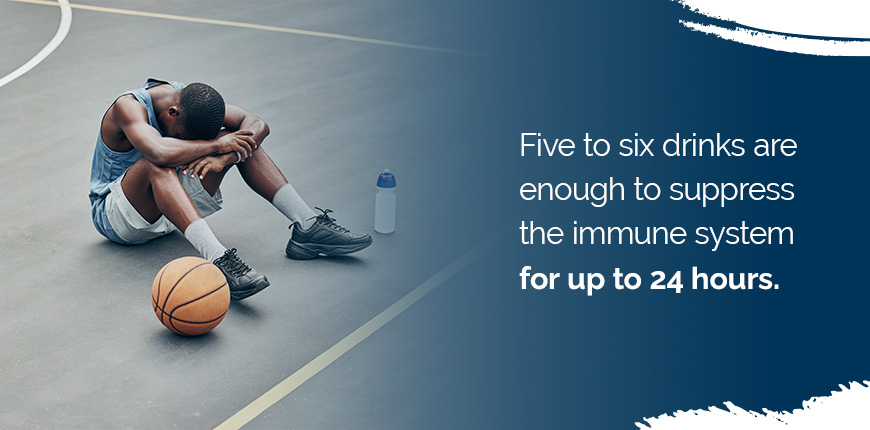
Regular alcohol use doesn’t just weaken recovery times. It also weakens the immune system of athletes and non-athletes alike. Five to six drinks are enough to suppress the immune system for up to 24 hours, and over time, these drinking sessions slow your immune system’s response time to infections and illnesses. As a result, athletes who drink may experience long-lasting symptoms and illnesses while their bodies expend more energy than normal to protect themselves and restore health.

As these health effects compound, they can significantly decrease athletic performance.

Drinking Alcohol While Recovering From a Sports Injury

If an athlete suffers an injury, they might feel compelled to numb their pain with alcohol. Since ancient times, people have used alcohol as a painkiller. In fact, 28% of people who suffer from chronic pain turn to alcohol. Unfortunately, alcohol only works as a pain reliever when it’s taken in amounts that exceed the recommended daily intake. 

In the end, it causes more harm than good and can lead to addiction. Here are the main reasons why alcohol is not a healthy solution for a sports injury or any injury at all.

Slows Recovery Time

Alcohol slows recovery from an injury because it limits the inflammatory response by decreasing anti-inflammatory molecules and increasing pro-inflammatory molecules. Chronic alcohol use leads to chronic inflammation and, ultimately, organ damage. Alcohol also affects the hormones needed for muscle growth and repair.

If an athlete suffers a concussion, for example, they should avoid alcohol at all costs. The brain needs time to recover from a traumatic brain injury (TBI), and alcohol slows down or completely stops the recovery. It also puts TBI survivors at risk for developing epilepsy or having a second brain injury.

Sleep is critical to help athletes heal from an injury, both physically and mentally. For instance, sleep is needed for healthy bone marrow, which eventually creates new blood cells in the body to help repair any damage. Inadequate sleep also affects liver function and makes it less efficient at detoxifying the body and managing glucose levels, not a good combination with alcohol. Alcohol can decrease sleep quality and disrupt sleep cycles throughout the night as well.

An injured athlete may feel isolated and depressed. Alcohol is a depressant and makes symptoms of depression worse. It also makes antidepressants less effective and could lead to poor life choices. An athlete needs a positive mindset and a healthy diet to help speed up recovery. Alcohol only brings users down.

Famous Athletes With Drinking Problems

Struggling with alcohol abuse is nothing new in the world of sports. Many famous sports players had substance use disorders, and many pushed their addiction too far. If they had gotten the help they needed, some of them might still be here today. You will likely recognize some of these names, and maybe a few will surprise you:

  • Brett Favre: Favre is a former football star who struggled with painkillers and alcohol addiction after issues from a concussion. Favre retired at age 46.
  • Mickey Mantle: Mantle entered rehab once a doctor told him his liver looked like a “doorstop.” His son, also a heavy drinker, died of liver cancer.
  • James Hunt: British racing driver James Hunt was widely known as an alcoholic. He died from a heart attack at age 45.
  • Babe Ruth: Baseball legend Babe Ruth struggled with alcoholism and died from cancer at 53.
  • Miguel Cabrera: Baseball pro Miguel Cabrera went to rehab and claimed he could not conquer his disease.
  • George Best: The Northern Irish professional footballer spent three months in jail for drunk driving. Best died at age 59 and had severe liver damage.
  • Andre the Giant: Known to consume large amounts of alcohol in one sitting, Andre the Giant died from heart failure at 46.
  • Lawrence Taylor: Taylor was an alcoholic for most of his time as a New York Giants linebacker.

The Effects of Alcohol on the Body

Alcohol use should not be taken lightly, whether you are an athlete or not. However, athletes need to be especially cautious of what they put in their bodies if they want to perform at their best. Alcohol abuse makes an impact in the following ways:

  • Causes weight gain: Alcohol has a lot of calories and sabotages efforts to maintain a specific weight. Alcohol consumption also encourages unhealthy diet choices.
  • Leads to nutritional deficiencies: Your body needs nutrients to function properly. Alcohol depletes nutrients, and heavy drinking can lead to nutritional deficiencies, affecting overall performance.
  • Increases disease risk: Long-term alcohol abuse increases the risk of cancer, heart disease and liver disease while weakening the immune system.
  • Increases fatality risk: In 2023, there were 96,610 liver disease deaths, with nearly 45% involving alcohol.
  • Has a negative impact overall: Alcohol consumption might also cause issues with school, finances and relationships.

Find Healing From Alcohol Addiction With Tranquil Shores

An addiction to alcohol can be debilitating for athletes, both on and off the field. Tranquil Shores is a specialized treatment center that helps athletes struggling with all forms of addiction.

We offer individualized treatment plans that are tailored to your needs, and our sports-specific therapy options take that individual focus even further. We even support your dietary needs via nutritional counseling, which is often vital for athletes. Once your time with us is through, you can still continue your journey to healing via our aftercare support services.

To learn more about how we help athletes struggling with addiction, contact us today or give us a call at 877-566-1166.
Find Healing From Alcohol Addiction With Tranquil Shores

Our Success Stories

your recovery is our main priority
Rated 5 out of 5
- Tom K.
Life is so much better after recovery. I'm in better spirits. I can conquer almost anything on my own. And I couldn't be happier.
- Former Patient
Recovery is about the beginning of a new life and not about dwelling on what you might have done in the past. The counseling, along with the spiritual basis for the counseling is second to none!
- Bryan F.
The people cared about me and the people took me under their wing. They not only saved my life, but they saved my brothers and in a way my sons.
- Former Family Member of Patient
We found at Tranquil Shores people who were totally dedicated to treating and healing the whole person, physically, emotionally and spiritually. They replaced despair and brokenness with confidence and joy, shame with acceptance and grace.
- Ashley
I had this act going like I was this great student and daughter and I was absolutely dying inside. Luckily I was blessed with amazing parents that talked to Chad Johnson and they figured out a way to get me to Tranquil Shores.
- Zack L.
This place is incredible. I have never experienced such kindness, care, and loving professionalism. This goes for the staff, the therapists, and the medical team. The curriculum changes each week and is run by professionals who have the experience to know first hand what they speak of.
- Michael G.
Tranquil Shores helped save my life when I could not. Everything was top notch from the amenities to the therapists. They pride themselves on having a great client to therapist ratio which really helps.
- RMB
This treatment center was instrumental in helping a loved one get sober. Condos on the beach are clean and comfortable. The frequent individual counseling sessions, family education, and weekly meetings with the psychiatrist were so exceptional.
- Sam H.
Out of all the treatment programs I have participated in, Tranquil Shores goes above and beyond in all areas to help a client succeed on their recovery path. Clinically, the team does an excellent job at addressing each area of life where mental health and substance abuse are affected.
- Michelle V.
Tranquil Shores has a very innovative recovery program that addresses mind, body and spirit and I think works. I would definitely recommend Tranquil Shores to anyone that is looking for an effective treatment/recovery program for addiction.

Ready To Reclaim Your Life?

We Are Ready To Help.
Name(Required)
This site is protected by reCAPTCHA and the Google Privacy Policy and Terms of Service apply.