
Balancing work with substance abuse recovery can feel overwhelming. If you’re in a high-pressure profession, the expectation to perform at your best can make it hard to prioritize your well-being. With the right tools, you can find stability in both areas.
Learn about coping strategies for recovery.
Challenges of Balancing Work and Recovery
Work provides structure and financial stability, but the pressure of a high-stress career can hinder progress in sobriety. Below are triggers that can test a recovering professional’s resilience:
- Stigma: Recovering professionals might fear being seen as unreliable, incapable or untrustworthy. Some may worry that admitting to past struggles might jeopardize job promotions or job security. This fear can lead them to keep their recovery private. It can also create anxiety if they worry about someone finding out who they are not comfortable sharing with.
- Stressful work environment: High-pressure careers require long hours, quick decision-making and the ability to handle intense workloads. This amount of stress can trigger a relapse. Some workplaces may normalize unhealthy coping mechanisms. Drinking after work with colleagues may be seen as a natural way to unwind after a tough day, but this culture can make it hard for someone in recovery to set boundaries.
- Emotional fluctuations: Some professionals may experience fluctuating emotions as their bodies and minds adjust to life without substances. Before sobriety, substances may have provided an escape from stress. Now, every emotion may feel amplified.
- Fatigue: During recovery, the body is healing, and sleep patterns may still be disrupted. Some professionals might experience low energy and difficulty concentrating. Combine that with work responsibilities, and exhaustion may be heightened. When energy levels are low, it can lead to frustration or mistakes.
- Time management: Professionals may struggle with time management in recovery because they feel like they’re being pulled in two different directions. They want to stay committed to their recovery, but they also don’t want to fall behind at work. This can lead to feelings of guilt for leaving work for a meeting or missing a support group because of a late project.
Strategies for Managing Addiction in the Workplace
The right strategies can help recovering professionals maintain their productivity and well-being. Below are tips for maintaining sobriety at work.
Manage Expectations
Returning to work after starting recovery often comes with a mix of emotions. Many professionals feel the need to overcompensate, either out of guilt or fear that their colleagues will doubt their abilities. It’s important to recognize that recovery is an ongoing process. Productivity may not be at its peak right away, and that’s OK. Rather than trying to operate at full speed immediately, professionals should acknowledge their limitations and set realistic goals.
Gradually Increase Your Workload
Some professionals may either push themselves too hard or fear they’ll never be able to handle their workload again. Instead of tackling the most demanding tasks, they should ease into their responsibilities. This might mean starting with shorter hours, breaking large projects into smaller tasks or focusing on manageable assignments. As confidence grows, so will the ability to handle more tasks.
Set Boundaries
Saying yes to every request, working late hours or attending events that feel unsafe can lead to unnecessary stress and exposure to triggers. Setting boundaries is about protecting progress. This can mean:
- Leaving work at a reasonable time.
- Skipping events where substance use is a norm.
- Communicating needs clearly, like requesting a quiet workspace to manage stress.
Take Care of Yourself and Build Healthy Habits
Self-care entails proper nutrition, regular sleep, hydration and exercise. Even small changes, like stepping outside for fresh air during breaks or keeping healthy snacks at the desk, can help. Professionals can also prioritize mental well-being by incorporating alternative healing, like meditation, breathing exercises or brief moments of relaxation into their routines.
Developing new, healthier habits can make challenges feel manageable. Some strategies include:
- Establishing a morning routine to set a positive tone for the day.
- Finding substance-free alternatives for networking or social gatherings.
- Engaging in hobbies outside of work that provide relaxation and fulfillment.
Seek Support
Seeking support from therapists, support groups or co-workers can ease the burden. Support can come in the following forms:
- Finding a trusted colleague who understands and respects the recovery journey.
- Attending workplace wellness programs or support groups, if available.
- Staying connected with recovery groups outside of work for additional reinforcement.
Tranquil Shores offers instructor-led didactic group therapy to help you break through the cycle of addiction.
Communicating Recovery Needs to Your Employer
Being transparent about your recovery can open the doors for a supportive work environment. Here’s how to have a conversation with your employer.
Review Company Policies
Before initiating any discussion, familiarize yourself with workplace policies related to substance misuse, medical leave and accommodations. Some companies may have employee assistance programs that provide confidential support, counseling and referrals. Others may have policies about medical leave, flexible work arrangements or treatment programs. If the information isn’t readily available, reach out to HR for clarification to determine the best approach.
Start the Conversation Early and Address Concerns
Waiting until a relapse or when work performance issues arise can make the conversation difficult. Initiating a discussion early allows professionals to take control of their narrative. Honesty doesn’t mean oversharing. The conversation should focus on solutions rather than personal struggles.
Employers may have concerns about how recovery will impact performance, attendance or reliability. For example, if an employer worries about absenteeism, employees can suggest remote work options or flexible scheduling. If productivity is a concern, employees can outline a structured work plan to show efficiency.
Know Your Legal Rights
Employees in recovery have legal protections that prevent bias and unfair treatment. In the U.S., The Americans with Disabilities Act (ADA) protects people in recovery from workplace discrimination, provided they are not currently using illegal substances. The Family and Medical Leave Act (FMLA) also allows eligible employees to take unpaid leave for medical reasons, including addiction recovery. Armed with this knowledge, professionals can advocate for themselves or seek proper recourse if things go unexpected.
Signs You’re Achieving Balance Between Recovery and Work
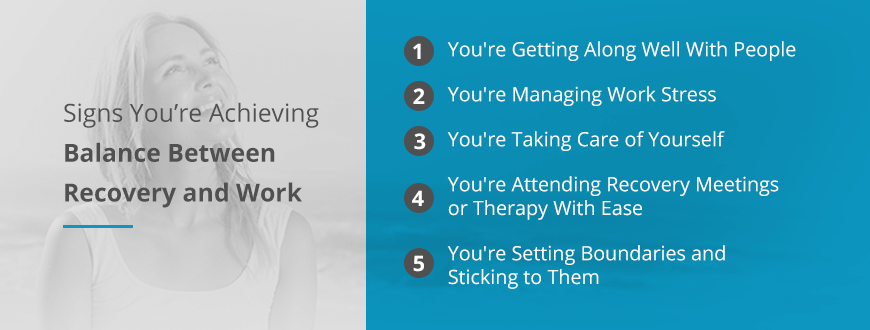
Now that you’ve started your recovery journey, how do you know you’re on the right track? Here are five signs you’re successfully integrating recovery into your work life.
1. You’re Getting Along Well With People
If you find yourself engaging in healthier, more positive interactions with colleagues, it shows growth. You may notice improvement in the following ways:
- Handling conflict calmly.
- Maintaining professional relationships without relying on substances.
- Feeling more comfortable engaging in workplace discussions or social settings.
2. You’re Managing Work Stress
Another sign of balance is that you’ve developed healthier coping mechanisms that replace old habits. You’ve learned how to address workplace challenges if you do the following:
- Handling deadlines and high-pressure situations without feeling overwhelmed.
- Using healthy coping mechanisms.
- Setting realistic goals and prioritizing tasks.
- Recognizing when you need a break and allowing yourself time to decompress.
3. You’re Taking Care of Yourself
When you prioritize your physical and mental needs, you’re making progress. Maintaining a healthy routine includes:
- Eating nutritious meals.
- Getting enough sleep and waking up feeling rested.
- Noticing increased energy levels and fewer stress-related physical symptoms.
4. You’re Attending Recovery Meetings or Therapy With Ease
As you progress, therapy sessions or support meeting commitments may have become a natural part of your routine. You might find yourself:
- Looking forward to or finding value in attending your sessions.
- Feeling that attending these sessions makes you more effective at work.
5. You’re Setting Boundaries and Sticking to Them
In the past, you might have overworked, taken on too much responsibility or said yes to social situations that involved alcohol or drugs. A sign of improvement is when you:
- Leave work at a reasonable hour.
- Say no to extra responsibilities that compromise your well-being.
- Avoid work events where substance use is a trigger without feeling guilty.
- Prioritize personal time and self-care.
Start Your Recovery Journey With Tranquil Shores
If you’re having difficulty managing addiction in the workplace, Tranquil Shores can help. We specialize in helping professionals in Tampa Bay, St. Petersburg, Clearwater and surrounding areas recover from substance abuse. Through a combination of evidence-based therapies, holistic treatments and professional support, we help you build the skills you need to balance work and personal life. We also provide ongoing aftercare services for sustainable success.
Call us at 727-391-7001 or Toll-Free at 877-566-1166 to get started. You can also contact us online.