
“I define connection as the energy that exists between people when they feel seen, heard, and valued; when they can give and receive without judgment; and when they derive sustenance and strength from the relationship.”
– Brené Brown
One way you can find this connection described by Brown is by learning how to create a support network in high-stress industries. In the United States, 70.4% of people with a substance use disorder are employed. In 2022, over 2,000,000 Floridians had a substance use disorder. This means 1.4 million of them were employed. There is a good chance that many of these people work with you and could benefit from an organized support network.
At Tranquil Shores, we aim to educate people on how they can make their lives easier in recovery. Today, we will explain how to create a support network in high-stress industries.
What Are Peer Support Networks and Why Are They Important?
Peer support networks contain people in recovery who wish to help others in similar circumstances. They are great for providing understanding, respect, and mutual empowerment for people at different stages in their journey. Being a part of a peer support
network can help keep someone on the path to recovery and reduce the chances they will return to use.
A peer support network is not a clinical treatment program and should not replace that need. However, it effectively ensures people remain successful and sustain their recovery as they transition into everyday environments, like the workplace. Creating a peer support network at work can provide you with people you can turn to when the challenges and triggers associated with your career occur. Likewise, it can allow you to be that person for others.
The First Step: Determine Your Goals for Your Peer Support Network
Before you create a peer support network at your job, it is essential to determine your goals. These goals can let your coworkers know what to expect from the network and whether they want to join it.
Creating a peer support network from scratch can feel overwhelming. Below are some of the most common goals a peer support network will have:
● Inspiring hope that people can recover
● Walking alongside others who are also on recovery journeys
● Disproving myths about what it means to have a substance use or mental health disorder
● Providing resources to educate about a specific condition
● Teaching people tools for recovery
● Supporting people in identifying their hopes and dreams
● Creating roadmaps to recovery
Remember that you might have some goals that are not listed here. Asking yourself questions can help you narrow down what your peer support network might look like.
Ask Your Coworkers About What’s Important to Them in a Support Network
Convincing people to join your support network might take a lot of work. This is why getting their opinion on what they would like from one is essential. Everyone is different, and they all have different needs and desires. Collaborating with coworkers to create this support network can be more beneficial and successful than building it alone. Incorporating ideas from your coworkers into the support network can increase engagement and social support within your working environment.
In addition, asking them what they want to see helps you understand their needs. As mentioned above, everyone is different. Your needs for a support network might differ from someone else’s, even if you have the same disorder. Having as many needs met helps everyone benefit.
Deciding Whether or Not to Get Employers Involved: A Potential Valuable Resource
Involving your employers can be a great way to strengthen your support network, especially if they are on board with the idea. Your employers may have resources or initiatives that can be shared and explained during your peer support network’s meetings. These include Employee Assistance Programs (EAPs), flexible working arrangements, webinars, and workshops.
There are also other ways they can help make the peer support network more successful. Some of these include:
● Providing a space for the meetings to take place
● Helping with any costs this support network might have
● Effectively promoting the support network by removing barriers to inclusion
● Giving additional support during work
● Ensuring time off for meetings
Your Peer Support Network’s First Meeting: How Can You Ensure It Is Successful?
You’ve gotten people into the doors of your peer support network’s first meeting. How can you know that it is successful? You need to keep two goals in mind for the first meeting. The first is that the people attending find the meeting helpful, and the second is that they want to attend another one.
Accomplishing the first task involves choosing a topic that the people attending the meeting want to know about. This goes back to when you asked your coworkers what they would want from a peer support network. What were the most frequent things they wanted to know? Provide them with resources that can help them learn more and become connected. As an example
topic, someone in your career might want to know how they can manage their stress levels while working 50 to 60 hours a week without reaching for alcohol or another substance.
Besides this, you also want to help them develop a solution to their needs. This could recommend treatment locations if they are beginning their recovery process. If someone is out of treatment and looking for tips on how to prevent a return to use, you could offer them a pamphlet of things to do instead of reaching for a substance like alcohol.
It may take more effort to get them to return. You want to give them a reason to return because if you don’t, they may not. This reason to return might be an upcoming guest speaker or additional information about the first topic. You can also ask your coworkers who came to the first meeting what they would like to see more of. Collaborating with them can give you ideas
and allow you to determine the room’s energy.
You also want to make sure they feel valued. There is a good chance that the people who show up will be at different stages in their recovery process. If they feel heard, validated, and appreciated, they will likely want to return to future meetings.
How to Create Structure for Your Peer Support Network Meetings
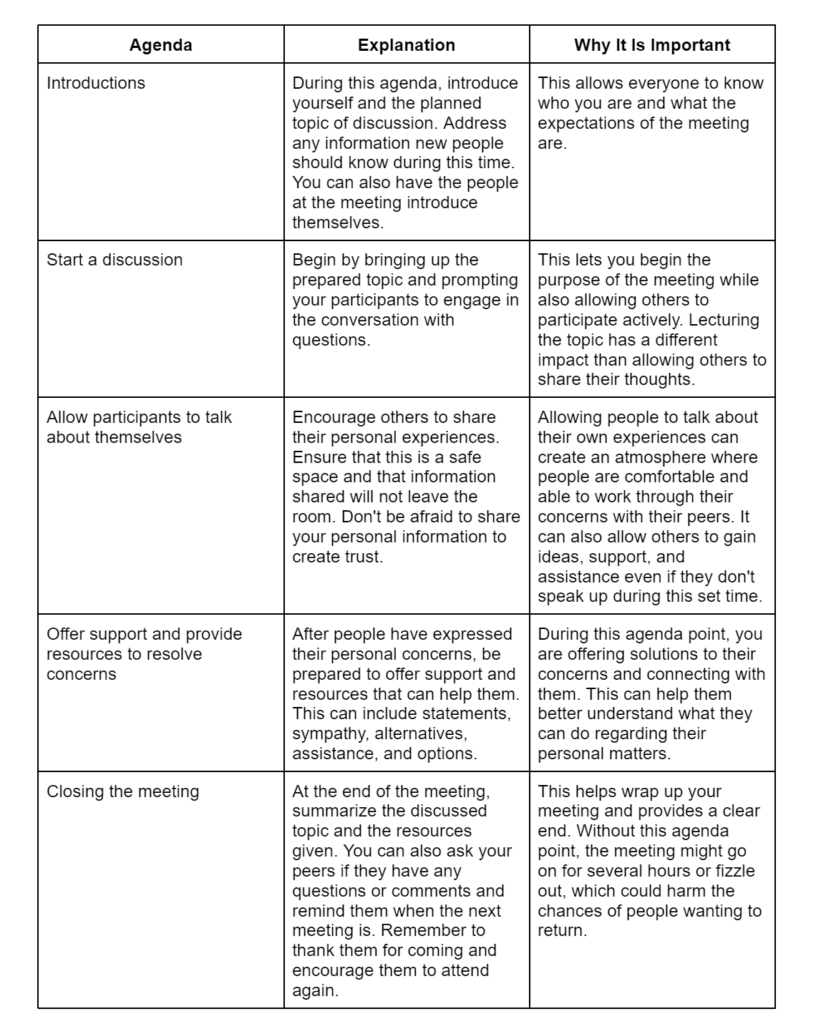
How you structure your peer support network meetings is essential to its success. You want a structure that effortlessly flows and is organized in a way that makes sense. This structure should be used during the first meeting to give people an idea of what will happen, but remain open to feedback if they think another order would work better. Below is a chart that explains a general structure that you can use for your peer support network meetings.
3 Resources to Help You Get Started
There are many resources on the internet to help people with substance use disorders. We will discuss a few that you can use for your first meeting.
One of those resources is this guide for corporate leaders on managing stress and substance use disorders. Sharing this with your colleagues and discussing the information and tools it contains can be valuable in helping them along their recovery journey.
Burnout is a common risk factor for someone in a high-stress career to return to use. This resource on recognizing burnout can help your coworkers become educated on this risk factor. It also discusses tips to decrease stress and prevent a return to use.
Some people might want to learn how to legally help their loved ones. Educating them on Florida’s Marchman Act can be helpful for families of people with substance use disorders to guide those they love to recovery.
Help for Professionals in Madeira Beach, FL
Attending a rehab designed for executives can help you build the skills necessary to live a healthier, more successful life. During treatment, you will receive tools and support tailored to your needs, ensuring you can recover. Having this foundation can allow you to help others in your working environment find similar successes.
Located on the beach with direct access, Tranquil Shores is here to help you find the recovery you deserve. With our 3:1 client-to-counselor ratio, we can remain focused on providing you with the care that allows you to recover and return to work healthy. Call 727-391-7001 for the peaceful and private treatment you deserve.