
The Dangers of Different Cocaine Delivery Methods
While commonly associated with being snorted, cocaine is a substance that can be consumed in a variety of ways. These range from snorting, to smoking, to injecting, and even eating it. In addition to general side effects, each delivery method of cocaine carries its own risks.
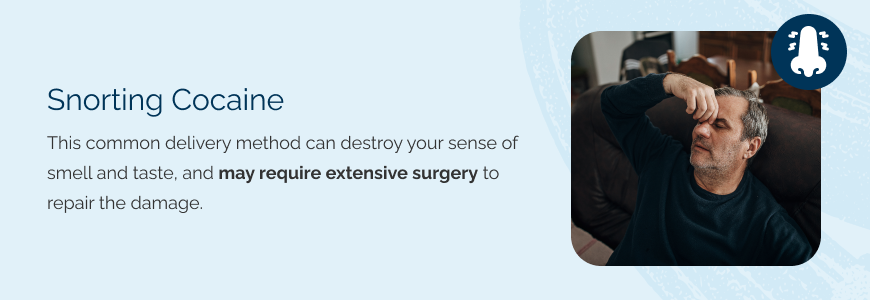
Snorting Cocaine
Also known as intranasal use, snorting is the most common delivery method for cocaine. This works by allowing the cocaine to be absorbed through the nasal cavity. In the sinuses, blood cells are tightly packed and close to the surface, allowing cocaine to quickly pass into the bloodstream.
However, while this delivery method is common, it comes with its own significant risks. With consistent use, nasal problems can eventually arise. Over time, senses of smell or taste may deteriorate and vanish. Nosebleeds and sinus infections are common. In some cases, a condition known as cocaine nose can occur. With this, accumulated damage to the nose and sinus region can become permanent, requiring extensive surgery to repair.
Other risks are present as well. While many think diseases can only be transmitted via needles, research suggests that some illnesses such as Hepatitis C can spread through the sharing of cocaine utensils, such as straws or cards.

Smoking Cocaine
To smoke or “free base” cocaine, it has to be in a crystallized form – also known as crack cocaine. When this is heated or burned, it releases vapors that can be inhaled. As these vapors enter the lungs, they are absorbed into the bloodstream through tiny sacs called alveoli. The lungs have millions of these tiny packets, so the cocaine is absorbed quickly.
This carries unique risks compared to snorting. Most of the vapor will be inhaled orally, so much of the nasal and sinus damage can be avoided. However, there are significant trade-offs. Lung damage is a serious risk, as the cocaine vapors penetrate much further than powdered cocaine. This often leads to coughing, wheezing, and general lung damage. Over time, this can become bronchitis, pneumonia, or other respiratory diseases.
Additional side-effects include dental damage, as the heated acidic vapors can wear away enamel – some studies suggest that tooth loss is up to 46% more common among those who smoke cocaine. Further, smoking cocaine comes with increased risk of overdose, as it’s easy to inhale large amounts of cocaine compared to snorting.
Injecting Cocaine
Injecting cocaine involves converting cocaine into a liquid form, then delivering it intravenously directly into the bloodstream. This often involves the most significant risks among delivery methods, in a variety of categories.
Cocaine overdose is a serious risk with injection, as higher doses of cocaine can be applied in a shorter duration. There are no factors diminishing absorption, as all of it is placed directly into the bloodstream. This can lead to severely negative symptoms such as chest pain, seizures, and in some cases death. If you or a loved one are experiencing an overdose, seek immediate medical attention.
This delivery method itself carries additional risks. Especially with non-sterile equipment, infections can quickly develop. Blood-borne diseases such as Hepatitis or HIV can be transmitted when needles or other equipment aren’t fully cleaned. Artery and vascular damage can occur if needles are misplaced or injected improperly.
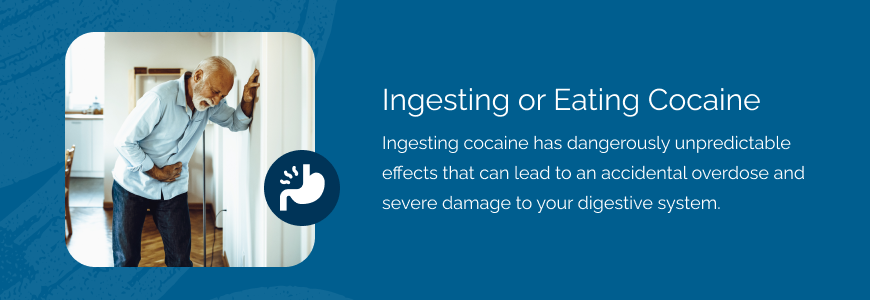
Ingesting or Eating Cocaine
Eating cocaine is considered by some to be a healthier way to consume cocaine. After all, the reasoning goes, It comes from a natural plant. However, this is not necessarily true. When cocaine is swallowed, it is eventually absorbed into the bloodstream through the intestinal tract, after first passing through the stomach.
The effects of swallowing cocaine are often unpredictable, as the digestive system can be highly variable. Sometimes, the cocaine may pass through quickly, giving an almost immediate “high”. However, at other times, cocaine may take hours to process, with no immediate response. This delay can lead your loved one to take far more cocaine than would be safe, as they don’t feel any initial effects. Additionally, this can leave cocaine in their system for far longer than they intended, or symptoms suddenly appearing in unsafe environments.
While not necessarily unique to eating cocaine, further risks include stomach pain, vomiting, and intestinal damage. Due to its perceived view as a healthier alternative, more general risks of cocaine use may also be more prevalent – substance use disorders, psychosis, depression, and other long-term side effects.
Getting Help for Cocaine Use in Madeira Beach, Florida