You want to support your loved one while they are in a treatment program, but you may not know how when you can’t physically be by their side. There are plenty of ways to show you care while they are in treatment. Your involvement makes a significant impact on their recovery. Social support has proven to be an essential feature in recovery, more so than any other factor.
This support takes many shapes and involves caring for the person in treatment, yourself and those in and around your family. The first step you should take, however, is learning about the process your loved one is going through so that you can support them.
Learn how to support a loved one in rehab and post-recovery and how to take care of yourself throughout the process.
How the Recovery Process Works
The most important thing to understand about the treatment process is that it is just that — a process. It is not an immediate or even a quick fix. It takes serious time, work and support from loved ones. These programs often involve:
- A detoxification period: The first stage involves flushing any remaining substances from an individual’s body. This process is often supplemented by therapy and medications designed to combat withdrawal symptoms.
- Various forms of therapy: One of the most difficult yet powerful aspects of treatment is therapy because it requires courage and open communication. One-on-one therapy with a mental health specialist is the most common form of therapy in a treatment program, but clients may also work with friends and family in group therapy sessions.
- Treatment for co-occurring mental health disorders: During treatment, medication and therapy may be used to combat co-occurring conditions, such as depression and anxiety, that can make recovering from substance use disorder more difficult.
- An aftercare plan: Recovery isn’t over once the individual leaves the program. Before they go, staff will work with them to create an aftercare plan, which may involve counseling or a dual-diagnosis support program. Each can build confidence and resiliency and make the transition out of the treatment center far easier.
Some steps may need to be repeated, but your support, patience and understanding of what your loved one is going through make the whole process easier.
Do’s for Those Supporting a Loved One in Recovery
Getting a loved one into rehab can be challenging for everyone, whether you are actually inside the treatment center or not. If you’re on the outside, it can be hard to know what your loved one needs from you, and you may feel like you could be doing more.
If you’re feeling uncertain about how to support your loved one, here are ways you can help:
1. Attend Family Therapy Sessions
One of the best ways you can support your loved one while they are in treatment is to participate in family group therapy and private family therapy sessions. By being there at the treatment center when you can, you’ll show your loved one that you take their recovery seriously and are willing to do what it takes to help them. It’s important for them to see that you believe in their recovery, as this will give them the motivation to keep pushing forward.
2. Work on Rebuilding Trust
You may feel your loved one has betrayed your trust during their struggle with addiction. To help them recover, it’s important to reestablish trust. Restoring trust takes time, but it’s something to work toward. Trust will help your loved one take responsibility for their actions and rebuild their self-confidence. To help build trust, treat your loved one with patience and understanding while they’re in recovery.
3. Communicate Honestly
You’re probably wondering how to talk to a loved one in recovery. In general, you’ll want to be honest in a gentle, non-judgmental manner. This means you shouldn’t be afraid to open up and let them know how you feel, what your hopes are and what witnessing their battle with addiction has been like for you. However, listen to what they have to say and strive to keep an open mind.
4. Be Compassionate
Compassion is a powerful tool when it comes to healing any addiction. Let your loved one know you care about them, empathize with their pain and invite them to share their concerns with you. This will help them recognize the issues at the root of their addiction. Remember to practice self-compassion and find healthy ways to experience and release anger, disappointment and other negative emotions associated with the addiction.
5. Be Available
Let your loved one know that you’re there for them and want to help them get better. Assure them you will do your part to create a supportive environment at home.
6. Respect Their Privacy
Your loved one may not want other family members or friends to know about their addiction and treatment. Respect their wishes and avoid talking about their treatment with others. In therapy, if they do not wish to discuss something that has happened, try not to push them to talk. They may need more time to feel comfortable talking about painful past events and behaviors.
7. Learn as Much as Possible
Learn as much as you can about their addiction and any co-occurring disorders. You’ll understand your loved one better, and you’ll be prepared to support them during treatment and once they come home.
Don’ts for Those Supporting a Loved One in Recovery
Support from family members can make an enormous difference in the life of anyone recovering from substance use disorder. Typically, we think of that support in terms of what we can do to help. However, there are also some things that we shouldn’t do, as they may make recovery more difficult.
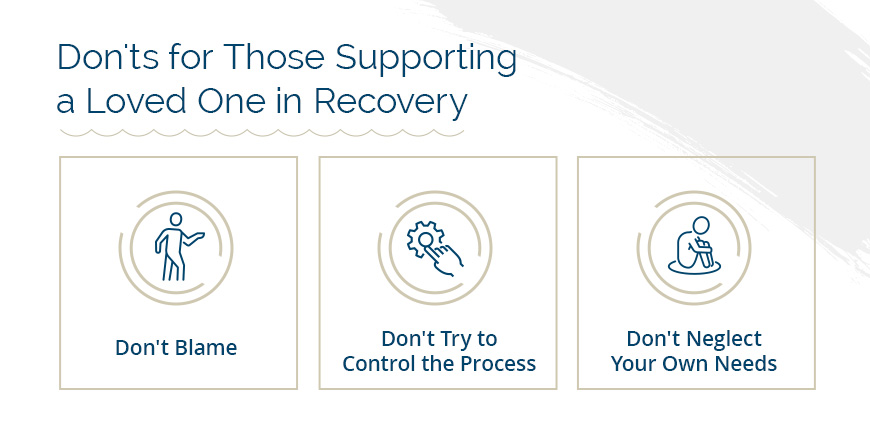
1. Don’t Blame
The stigma and misconceptions around substance use and recovery can complicate treatment, especially if they come from the individual’s family. Rather than blaming, offer comfort and understanding so that your loved one feels safe and supported as they navigate recovery.
2. Don’t Try to Control the Process
When a loved one is going through a treatment program, it can be tempting to monitor and supervise every aspect of their treatment to make sure they’re doing well. However, this can unintentionally communicate a lack of trust and even impede the work of therapists and doctors. Instead, trust the process and have faith in your loved one and the staff supporting them.
3. Don’t Neglect Your Own Needs
Recovery can place a lot of emotional and physical strain on family members, especially if you’re participating in family therapy sessions or staying up late reading about what you can do to help. Remember, you can’t help a loved one with an addiction without helping yourself first. Make sure you eat, sleep and exercise properly so that you can be there to support them when they need you.
How to Cope With a Loved One in Recovery
If a family member is going through treatment, you may feel overwhelmed with concerns. Keep in mind that there’s nothing to fear — your loved one is exactly where they need to be. Here are five tips to help you manage difficult emotions and provide the best support possible.
1. Know That They Are in Good Hands
You might be worried about your loved one’s safety while they are in recovery. You might wonder who they are with, what they’re doing and how they’re feeling. It’s not easy to deal with uncertainty. However, you can rest assured that your loved one is surrounded by compassionate and experienced professionals who have been trained to help clients with substance use disorders and co-occurring disorders.
You can expect your loved one to receive support and care from a psychiatrist, licensed counselors, nurses and trained support staff. Treatment specialists at Tranquil Shores are available 24/7, so your loved one never has to cope with challenges alone.
2. Learn About Addiction
It may be hard to understand what your loved one is going through because addiction is a complex disease. However, as a family member, you play a major role in your loved one’s recovery. By learning about your loved one’s addiction, you’ll gain a better understanding of what to expect and how you can help. You’ll also learn not to place all the burden on yourself while still offering your support.
You do not have to learn about addiction alone or without guidance. With your loved one’s consent, you may be asked to participate in family group sessions, where you’ll learn about the recovery process and how to be supportive. Eventually, you may also partake in private family therapy sessions. Family therapy sessions aim to teach helpful behaviors and decrease unhelpful behaviors, as well as improve family dynamics. While you’re in a group or private family session, you may learn or ask questions about the following topics:
- How to build a healthy support network
- How to help a loved one cope with triggers now and in the future
- How to restore relationships that were impacted by addiction-related behaviors
- How to communicate in a productive way
- How to avoid enabling behaviors
- How to set boundaries
- How you or other family members played a role in the addiction
- How you are and have been affected by the addiction and how to heal
- How to recognize the warning signs of relapse and strategies to prevent relapse
Through your involvement, counselors will also gain a better understanding of your loved one and how they can help.
3. Know What to Expect
If you’re feeling anxious about your loved one and their experience in treatment, it helps to know what their treatment entails. Typically, your loved one will undergo an evaluation when they arrive at the treatment center. Our clinical professionals will then develop an individualized treatment plan based on your loved one’s needs.
You may or may not hear from your loved one during the first few days of their recovery, depending on their needs and wishes. It’s important not to take this personally, as this is part of the process and meant to help your loved one focus entirely on getting sober. Know that someone will be in contact with you soon, and you can relax during this time. Your loved one is being cared for by medical professionals who are doing what’s best for their physical and mental health.
In the early stages of treatment, your loved one will also be evaluated to determine the presence of a co-occurring disorder. Many individuals with substance use disorder have a co-occurring disorder, such as depression or anxiety. According to the National Institute on Drug Abuse, about half of individuals who have a mental health issue also experience a substance use disorder at some point in their lives. It’s critical for treatment to address all your loved one’s mental health needs. Counselors will develop an individualized treatment plan to work through mental health issues and addiction.
In general, treatment will include a mix of group and individual therapy. Group therapy helps clients feel less alone and provides peer support. Individual therapy sessions allow clients to work one-on-one with a counselor to recognize and change negative behaviors and learn ways to cope with triggers.
Eventually — typically within the first two weeks — you may be asked to join family therapy sessions. A quality program will tailor family therapy to your loved one’s needs and incorporate family involvement when they are ready. You may also be encouraged to receive individual therapy to recover from the effects of addiction as a family member.
4. Help Yourself
Substance use disorder takes a toll on family members. You might feel angry, anxious, depressed or guilty. You might be worried about financial issues resulting from the addiction, or your relationship with your loved one may feel tense. It can be a lot to handle on your own. To help your loved one, it’s best to help yourself and address your mental health needs. Only then can you provide a positive and supportive environment for them.
First, make sure you get enough sleep, eat a healthy diet, exercise and seek therapy for mental health problems and codependency issues. By discussing your experience with a counselor and examining your behavior, you can learn to change unhealthy behaviors and provide better support as a result. If you struggle with addiction, now is the time to get help.
Also, seek others who are going through the same experience as you. Lastly, make time to enjoy hobbies, explore your interests and live life separately from your loved one.
How to Support Someone Post-Rehab
Once your loved one leaves treatment, their recovery will still need to continue. Your loved one will develop an aftercare plan with a counselor before they return home, which will make the transition easier. As a family member, you can develop a plan to help them transition as well. Here are ways you can help your loved one continue their recovery:
1. Create a Supportive Environment
While in treatment, your loved one is in a structured, drug-free environment. When they leave, they transition back into an unstructured world. It’s critical to create a home that is free of temptation. That means removing any alcohol from the home and refraining from using substances around your loved one. If possible, help your loved one develop a routine that will help them avoid triggers.
2. Encourage Joining a Support Group
Encourage your loved one to join a support group within the community. This can help them overcome triggers and remind them that they are not alone in their journey.
3. Communicate Openly
Practice exchanging your concerns and struggles openly, honestly and with understanding. Remind your loved one that they are strong and that you are there to help them. Ask what their expectations are of you during their recovery and what they need.
4. Share Healthy Habits
Help your loved one stay on a positive path by keeping busy and enjoying healthy activities together. Take an art class together or go on hikes when you have free time. Help them make healthy lifestyle choices, like eating a nutritious diet and getting enough sleep. Also, give them time and space to adjust to their new life — and be patient.
5. Focus on Them as a Person
It can be hard to focus on anything other than your loved one’s addiction at times, but it’s important to help them realize that addiction does not define who they are. Remind them of their dreams, talents and goals in life.
6. Take Breaks
Don’t forget to nurture yourself. Being in a caregiver role can be exhausting, and you won’t be able to do your best if you don’t take care of yourself. Make sure to take time to recharge your battery.
Perhaps most importantly, do not blame yourself if your loved one relapses, and know that professional help is always within reach. Also, keep in mind that although you have the power to support your loved one and show you care, you cannot control their actions — they are responsible for their recovery. Don’t take on challenges they can handle themselves, and gently remind them they are in charge of their life.
Call Tranquil Shores Today
If you have a friend or family member who could benefit from a treatment program, it’s time to address it. The best step you can take for your loved one struggling with addiction is to help them get the support and treatment they need. Call Tranquil Shores at 727-391-7001 or toll-free at 877-566-1166 to learn how you can help them as they reclaim their life.