
Cocaine is more than a “party drug” — many people who start using cocaine can find themselves at risk for developing a lifelong addiction that can affect their health, relationships and every other part of their lives. If you think someone you love may be misusing cocaine, the time to speak up is now. Learn more about what signs and symptoms of cocaine abuse look like and how you can help today.
Key Signs and Symptoms of Cocaine Abuse
Cocaine addiction comes with physical as well as behavioral symptoms. You may also notice symptoms specific to cocaine withdrawal. Even if you only notice a couple of these signs, it is worth checking in with the person exhibiting them and making sure they know you are there to support them as much as possible.
Physical Symptoms
Many of these signs are immediately clear to others in the person’s vicinity, such as:
- Dilated pupils
- Constant runny noses or nosebleeds
- Difficulty smelling or swallowing
- High body temperature (sweating, flushed skin, etc.)
- High blood pressure
- Increased heart rate
- Headaches and nausea
Behavioral and Psychological Symptoms
Other symptoms take more time to uncover because they are mental. As you communicate with your loved one, you may notice:
- Intense mood swings between euphoria and depression
- Unexplained paranoia or agitation
- Restlessness and lack of focus
Symptoms and Effects of Cocaine Withdrawal
The symptoms of withdrawal from cocaine addiction can look similar to those of withdrawal from alcohol and other illicit substances. Withdrawal can be extremely difficult to go through alone, especially due to the risks of severe depression or suicidal thoughts in some individuals. It’s especially important to seek help if they exhibit:
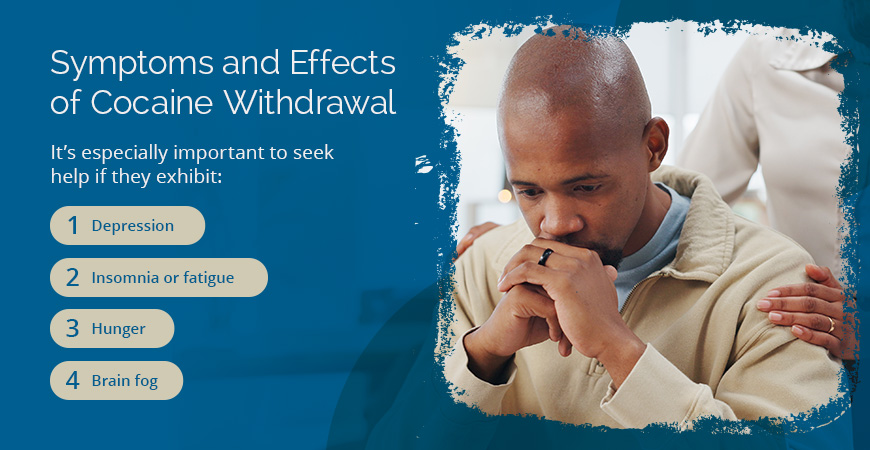
- Depression
- Insomnia or fatigue
- Hunger
- Brain fog
While these symptoms can make getting sober feel challenging, recovery is possible for anyone. The long-term effects of cocaine abuse can include internal organ damage, psychological problems and overdose risks. The sooner someone gets help, the lower their risk of permanent side effects.
Why You May Need Professional Detox Support
While mild symptoms of withdrawal may be tempting to handle alone, the situation can change quickly and make those challenges severe and potentially life-threatening in cases involving suicidal thoughts or preexisting health conditions. This is because the body is used to receiving these chemicals regularly, and when they’re gone, it has to work harder to maintain internal homeostasis, or balance.
Furthermore, the symptoms of withdrawal can be so debilitating that some people relapse instead of finishing detox. Going through a professional medical detox program serves two purposes:
- The person is surrounded by medical professionals who know how to treat the worst withdrawal symptoms, making the person more comfortable and safe throughout their detox.
- The person is kept in a facility free of substances, removing the ability to procure more cocaine and the temptation to relapse.
How to Get Help for Cocaine Addiction
If someone close to you is exhibiting the physical symptoms of cocaine addiction or withdrawal, Tranquil Shores wants to help. Whether they need support through detox or a full inpatient rehabilitation program, our experienced, compassionate professionals are here for them and for you. Call us at 727-391-7001 or toll-free at 877-566-1166 to learn more or submit a contact form to request a confidential consultation.