
Did you know that your feelings and actions may not always be intrinsic to your reality but, rather, stem from your unconscious thoughts? This is a driving principle of cognitive behavioral therapy (CBT), which is often used to address disorders like depression, anxiety and PTSD. It can also be a powerful tool in addiction treatment.
At Tranquil Shores, we understand that it may be easier to take the first step toward treatment when you know how and why it works. Once you recognize key CBT principles, such as how thoughts influence feelings and behavior and how goal-setting can help change those behaviors, you can see CBT’s value as part of a holistic addiction treatment.
Understanding CBT and Its Application to Addiction
Cognitive behavioral therapy is a talk-therapy program that addresses dysfunctional thoughts, behaviors and emotions. While they can take many forms, many CBT treatments follow the same overall structure of using directive exercises to help individuals recognize thought patterns that may play a role in addiction and manage them to develop healthier behaviors.
This problem-focused and goal-oriented therapy is about learning coping skills and developing problem-solving strategies to overcome addiction and the thought patterns that lead to it. It differs from other therapies in that it focuses on specific, highly structured steps in the present rather than focusing on the past or broader, more general goals. The client also plays a central, active role in CBT, developing and practicing strategies based on their own goals and needs.
At Tranquil Shores, we see CBT as a vital part of our holistic approach to treatment. Together with counseling, medication and other steps, it can help you reclaim your life from addiction.
The Core Principles of CBT
CBT leads to successful outcomes for many clients because it focuses on several key principles. Understanding these principles is essential for maximizing the benefits of your therapy.
Thoughts Influence Feelings and Behaviors
One of the most important underlying principles of CBT is that anxiety disorders stem from biased thinking and maladaptive behaviors learned unconsciously. According to this cognitive model, the emotions and behaviors come from the perception of an event rather than reality itself.
Faulty lines of thought, such as all-or-nothing thinking, catastrophizing and overgeneralization, could lead someone to believe the world is inherently negative or that they should feel bad about themselves. CBT aims to address these underlying thought patterns to improve mental health and prevent or stop coping mechanisms such as substance abuse.
Identifying and Challenging Negative Thoughts
The practice of identifying and challenging negative thought patterns is another core principle of CBT. It begins with learning to recognize faulty, negative thoughts through:
- Thought records.
- Cognitive restructuring.
- Socratic questioning.
Once clients can identify these thoughts when they arise, they can actively challenge them. Socratic questioning, for example, may involve discussing alternative views to a specific negative thought and reflecting on how these other considerations may have value or put the initial feelings into context. Clients may then be able to resist maladaptive behaviors and overcome the negative emotions.
Changing Behaviors
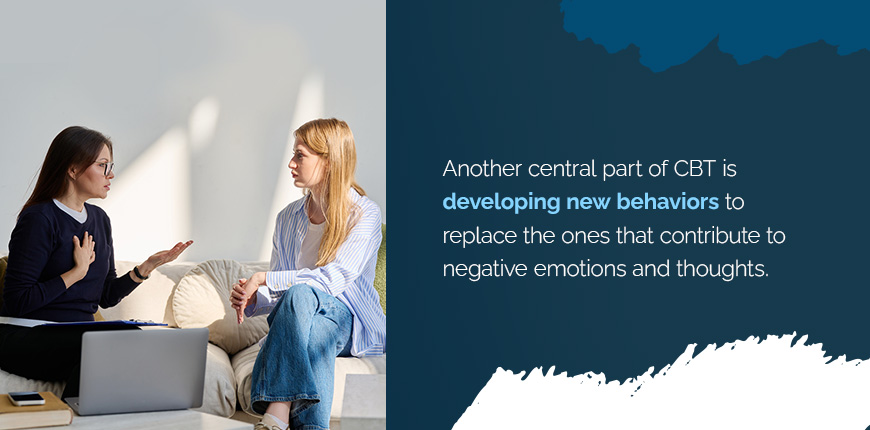
Another central part of CBT is developing new behaviors to replace the ones that contribute to negative emotions and thoughts. One common approach is behavioral activation, where clients participate in constructive activities that lead to positive feelings instead of waiting on the motivation to do the things they enjoy.
Exposure therapy, where clients slowly acclimate themselves to something they fear, is another approach. Across all methods, it is most important to reduce avoidance behaviors and practice positive coping mechanisms.
Setting Goals and Solving Problems
Setting and pursuing realistic, achievable goals is another important CBT principle. Clients learn to anticipate problems and develop skill to help them overcome future obstacles, taking a proactive and involved role in their own recovery journey.
A client may learn through therapy that regular stressors weigh on them heavily and push them toward substance use. In CBT, they may set goals related to this, such as taking a series of steps to avoid specific stressors or regularly engaging in activities that help them develop more positive feelings.
Collaboration and Active Participation
The client’s active role is essential in CBT. While a therapist offers insight and helps the client recognize negative thought patterns and take action against them, putting that insight into action requires the client’s participation in the process.
This collaboration empowers individuals to take action independently when facing future challenges. It also tailors treatment to the individual.
CBT Techniques for Addiction
There are several ways to implement these core principles of CBT. Some examples include:
- Relapse prevention, where clients recognize and fight triggers and high-risk situations.
- Coping skills training, which teaches clients positive coping mechanisms to replace substance use.
- Urge surfing, where clients learn to observe and “ride out” urges instead of suppressing or giving into them.
- Contingency management, where clients positively reinforce constructive behaviors.
Benefits of CBT for Addiction
In all its forms, CBT is effective at improving symptoms of a wide range of conditions, including addiction, anxiety, bipolar disorder, depression, schizophrenia and eating disorders. It can help facilitate:
- Emotional regulation.
- Reduced impulsivity.
- Enhanced coping skills.
- Healthier lifestyle habits.
- Increased mindfulness.
Ready to Reclaim Your Life?
Understanding the core principles of CBT is key to using it as an effective tool to overcome addiction. If you are ready to get started, you can call Tranquil Shores today at 727-361-6707 or complete our online form to begin your next steps toward recovery.