
Substance use disorders are complex conditions with many potential causes. Among the many factors that affect your chances of developing an addiction, anxiety may contribute more than you think. The Substance Abuse and Mental Health Services Administration (SAMHSA) estimates that 35% of U.S. adults with a mental health disorder, including anxiety disorders, also suffer from substance abuse disorders. The National Institute on Drug Abuse (NIDA) estimates that people with anxiety are about twice as likely to develop an addiction than people without it.
Many of those who struggle with anxiety and addiction feel trapped in a cycle that reinforces itself over time. Learning the ways anxiety influences and interacts with addiction is key in learning how to manage both conditions effectively and get the most out of mental health and addiction treatment.
Anxiety Can Lead to Substance Abuse
Almost everyone has experienced a period of anxiety in their lives. Whether it’s worrying briefly before a test or job interview or a prolonged period of fear and tension not spurred by a particular source, most of us have been in an anxious state at some point. Anxiety disorders diagnosed by a mental health professional are prolonged and severe enough that they affect a person’s quality of life and prevent them from doing the things they need to do on a consistent basis.
Anxiety disorders are the most common mental health condition in America, affecting about 19.1% of the adult population each year. Fortunately, those with anxiety often seek treatment far sooner than those living with other mental health conditions. According to the Anxiety & Depression Association of America (ADAA), they are 3 to 5 times more likely to visit the doctor and 6 times more likely to be hospitalized for psychiatric disorders.
Additionally, the link between anxiety and addiction is a strong one, and it is widely thought to be causal rather than coincidental.
A study of children who were treated for anxiety followed up with the subjects 7.4 years later. The researchers found that the kids who had responded well to treatment and experienced less anxiety were significantly less likely to abuse drugs or alcohol than the children whose anxiety persisted. The message is clear — anxiety can be a direct causal contributor to the development of addiction.
Symptoms of Anxiety
Anxiety as a feeling can be a normal response to stress. It is best described as a sense of apprehension or fear about what will happen next. It is most common as a response to stressful events or unfamiliar situations like starting a new job or having to give a speech. The difference between passing anxiety and a diagnosable anxiety disorder is persistence. Normally, once the frightening event is over, the passing anxiety dissipates until the next stressful event.
With an anxiety disorder, the “fight or flight” feeling doesn’t necessarily go away when it should, and it often crops up in inappropriate situations or without an obvious trigger. The symptoms associated with a generalized anxiety disorder (GAD) include:
- Feeling on edge, wound up or restless.
- Tiring easily.
- Difficulty concentrating.
- Irritability.
- Muscle tension.
- Difficulty controlling feelings of worry.
- Difficulty falling or staying asleep.
Someone with an anxiety disorder may be prone to panic attacks at unexpected moments. These attacks are concentrated anxiety events that escalate within minutes. If the panic attacks are recurrent and frequent, the person may be diagnosed with panic disorder. The
- A pounding heart or accelerated heart rate or pounding heart.
- Trembling or shaking.
- Sweating.
- Shortness of breath or feeling smothered.
- Feelings of choking.
- Discomfort or pain in the chest.
- Nausea.
- Dizziness or lightheadedness.
- Hot or cold flashes.
- Numbness or tingling (paresthesia).
- Feelings of unreality or detachment from oneself.
People in the midst of a panic attack often feel like they are “going crazy,” and the sense that their heart is racing or pounding sensations can even make them feel like they are experiencing a life-threatening health event. Panic attacks are concentrated events that escalate within minutes.
The frequency and intensity of panic attack these symptoms vary among individuals, but they are by no means pleasant, and anyone would avoid them if given the choice. Unfortunately, those with anxiety disorders don’t have that option, and many people turn to drugs or alcohol to quiet the symptoms of anxiety. Depressants and sedatives, for example, can temporarily reduce or mask the symptoms of anxiety. These medications work by reducing brain activity in certain areas, which results in a slowdown of the body’s functions and a depressing effect
Xanax, a sedative drug in the benzodiazepine class, is actually prescribed for panic disorders in some cases, but the major danger is that benzodiazepines are highly addictive. Over time, an addicted person has to take more and more to feel the sedative effects at all.
Alcohol, another common substance people use for self-medication, is a depressant that inhibits neurotransmitters in the brain. This change makes the brain more sluggish, which can temporarily counter the unpleasant, racing feelings of anxiety. However, alcohol is also highly addictive and wreaks havoc on multiple bodily systems over time while doing nothing to address the root causes of anxiety.
PTSD and Addiction
Post-traumatic stress disorder (PTSD) is a type of anxiety disorder that results from unresolved trauma. Sexual assault carries the highest risk for PTSD, although a significant percentage of those who serve in the military also develop PTSD as a result of combat exposure. Whatever the cause, PTSD is a serious form of anxiety that has unique symptoms, including:
- Re-experiencing the traumatic event through flashbacks and nightmares.
- Flashbacks and nightmares of the traumatic event.
- Emotional numbness and avoidant behavior.
- Difficulty sleeping and concentrating.
- Feeling jumpy and easily irritated.
People with PTSD will go to great lengths to avoid the intrusive visions that cause them to experience their trauma anew, and unfortunately many turn to drugs or alcohol to keep them at bay. In other cases, the substance abuse disorder may predate or even contribute to the traumatic experience. Either way, PTSD and addiction complicate one another and can make treatment difficult if they are not handled together.
Dual Diagnosis of Anxiety and Substance Abuse
Experiencing a mental illness and a substance use disorder concurrently is not a rare phenomenon. In fact, the prevalence of substance use among those with anxiety disorders is quite high. In 2020, about 17 million U.S. adults experienced both, resulting in what’s called a dual diagnosis. This diagnosis is vital when it comes to seeking treatment, as dual diagnosis treatment addresses both the addiction and the mental illness and seeks to help the client examine and overcome the relationship between the two.
The challenge with dual diagnosis is determining what triggered the onset of each condition. With PTSD, the cause of the disorder is often clear because the person suffering is typically brought face-to-face with the traumatic event or series of circumstances on a regular basis. With generalized anxiety or panic disorder, the source of the condition is rarely clear.
Anxiety is not always the cause of addiction, either. In some cases, addiction can cause anxiety to come out of the woodwork. If, for example, someone abusing alcohol starts neglecting their responsibilities and skipping work, they may start to experience minor instances of panic or develop general anxiety about the fact that they have been missing work and may lose their job.
Certain substances can also create or exacerbate feelings of anxiety. Stimulants, like cocaine or prescription medications for attention-deficit/hyperactivity disorder (ADHD), excite the nervous system, which can cause anxiety. Long-term abuse of these drugs can lead to a semi-permanent anxious state, which is worsened when the person stops taking the drug and goes into withdrawal.
In many cases, the relationship between anxiety and addiction is not clear, which can complicate both diagnosis and treatment. Honesty and open, consistent communication between medical professionals and those seeking treatment can help both parties carve through the fog and find solutions.
Dual diagnosis treatment addresses both the addiction and the mental illness and seeks to help the patient examine the relationship between the two.
Anxiety and Substance Abuse Need to Be Treated Together
Someone with a dual diagnosis may not benefit from a program that tries to treat only the substance abuse aspect of their illness. When anxiety is an underlying cause of addiction and is left untreated, the client’s motivation for abusing drugs or alcohol remains intact and can trigger a relapse at unexpected moments. If only the anxiety is treated, the addiction may put the client in uncomfortable positions that can trigger their anxiety, which can reinforce the addiction as a coping mechanism.
Once anxiety and addiction have become interwoven, the difficulty of treating both conditions increases. Addiction encodes itself into the physical structure of the brain in ways that are challenging to undo. One of the main results of substance abuse is loss of memory and impaired executive function, which leads to a loss of neuroplasticity — the brain’s ability to adapt to changing environments.
When neuroplasticity decreases, the brain essentially becomes more set in its ways and prefers to keep using the same pathways it’s used in the past. When those pathways and patterns include thoughts and feelings based in anxiety, it’s harder to “rewire” the brain for more positive and healthy behaviors.
Effective Treatment for Anxiety and Addiction
There are a number of methods for treating a dual diagnosis of anxiety and addiction. In many cases, an integrated treatment approach that considers the mind-body connection is the most effective treatment for people with co-occurring disorders. The main focus of dual diagnosis treatment is psychotherapy, which usually includes a specific technique called cognitive behavioral therapy (CBT).
The goal of CBT is to change perceptions and behaviors. It is based on the idea that behaviors are learned rather than innate. A person learns that drugs or alcohol make them feel better temporarily, and they can unlearn that behavior by identifying irrational thoughts and replacing them with healthier ones. The focus is on setting attainable goals and learning to use new tools to achieve those goals in recovery. The first step is often learning to think more rationally and identify thoughts that are illogical and unhelpful.
In addition to the work done in therapy, people with a dual diagnosis need activities that stimulate the connection between the mind and the body. These elements can come together to form a more holistic treatment experience. Below are five of the most common practices.
1. Mindfulness
Mindfulness is the practice of becoming more aware of your thoughts, feelings and actions in the moment. It is a particularly useful practice for treating anxiety, as anxiety often results in people being trapped in a state of “what-if.” Typically, this state involves conjecture and wondering how any given situation can go wrong, even if the odds of that happening are slim or if the situation is hours, days or even months away.
Mindfulness combats this endless speculation and starts with simply paying attention. Slowing down and noticing things in a hectic world does not come naturally to most people, so taking the time to consider your surroundings and how your body and mind interact with them can be a revelatory experience. Mindfulness asks that you stop projecting forward in time and bring your consciousness back to the present moment.
Mindfulness exercises often focus on self-acceptance and finding peace with your current circumstances. They can ease anxiety, make it easier to accept and release addictive urges and even support a healthier, happier lifestyle as a whole.
2. Exercise
Aerobic exercise has a range of benefits and can be a powerful tool for combating anxiety. Exercise can reduce fatigue, improve alertness and lead to improved cognitive function, making for a healthier brain that is better equipped to fight anxiety and fend off cravings. An effective addiction treatment program allows for multiple forms of exercise to match the needs of different clients.
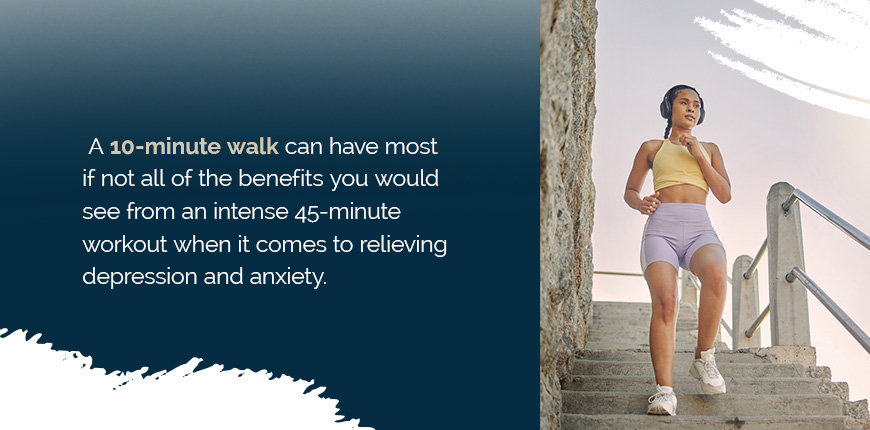
You don’t have to go on a 5K every other day to see the benefits of exercise for your recovery. A 10-minute walk can have most if not all of the benefits you would see from an intense 45-minute workout when it comes to relieving depression and anxiety.
That said, more intense cardio and strength training also offer these benefits and may even improve your confidence and self-perception as you learn to run faster and lift heavier weights. You can even work with a trainer or partner if you are nervous or want to learn the ropes before you start training on your own.
3. Yoga
A growing body of evidence is showing what many people have already found out — yoga is a natural form of stress and anxiety relief. Studies that have examined the practice show that yoga helps to regulate the body’s stress modulation systems, reducing the incidence and impact of stress responses caused by anxiety. Some of the physical effects of yoga include lowered heart rate and blood pressure as well as more relaxed breathing.
Although there are some physically demanding and intense forms of yoga, it’s generally a practice that is accessible for all ages and can accommodate a wide range of abilities.
4. Massage
As stress relief goes, few therapies are more enjoyable and effective than massage. A 60-minute session can significantly reduce levels of cortisol, a hormone the body produces as a response to stress. In the absence of cortisol, serotonin increases. Serotonin has a wide array of functions in the body but is sometimes referred to as the “happy chemical” due to its contributions to feelings of well-being and general happiness.
Massage can also help with pain, a significant contributor to stress that makes it harder to resist drug and alcohol cravings. No matter how you look at it, massage is a great way to find relief from life’s challenges.
5. Acupuncture
Acupuncture, the ancient practice of stimulating points on the body by penetrating the skin with a needle, is a valued component of traditional Chinese medicine. It is often used to treat osteoarthritis, relieve headaches and alleviate pain in various sites like the neck or lower back. While it might seem a bit intimidating, many people find the practice soothing and meditative. For those whose anxiety is caused at least in part by pain, acupuncture can be an excellent two-fold aspect of treatment.
Find Peace at Tranquil Shores
Because anxiety is such a common condition, many people don’t realize how closely it is tied to the development of addiction until it has already taken over their lives. It’s natural to feel confused and hopeless, but you’re not alone in this painful struggle. Tranquil Shores is a Tampa Bay rehabilitation center where dual diagnosis is treated with compassion, respect and expertise in evidence-based methods.
We face the challenge of substance abuse and anxiety head-on with a combination of medical and psychological care alongside holistic therapies. To learn more about how Tranquil Shores can help you manage anxiety during and after treatment, call us at 727-391-7001 or Toll-Free at 877-566-1166 for more information about our holistic addiction treatment programs for dual diagnosis.